
Station Road Bridge, Southfleet, Undergoes Infill to Improve Safety
The historic Station Road Bridge in Southfleet, Kent, is currently undergoing an infill process to address safety concerns and improve its structural integrity. The project, managed by National Highways and carried out by Hammond (ECS) Ltd, is expected to last approximately seven weeks, starting from January 13, 2025.
Background on the Bridge
The Station Road Bridge, constructed in 1886, carries the B262 road over the disused Gravesend West Branch railway line. It features brick arches supported by wrought iron riveted plate girders, along with brick abutments and a central pier. Over the years, the structure has deteriorated, leading to concerns about its load-bearing capacity.
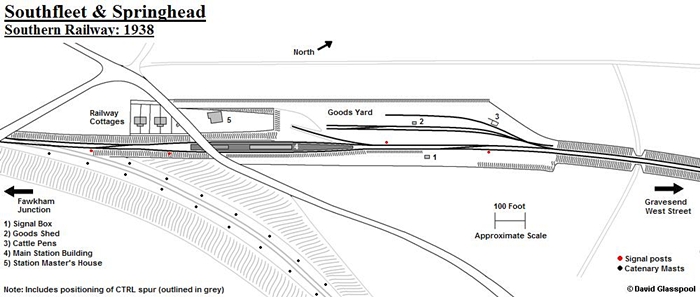
After thorough evaluations of safety, ecological, and heritage considerations, National Highways determined that infilling the bridge was the best solution to ensure long-term stability. Planning permission for the project was granted by Dartford Borough Council in August 2024, and the contract, valued at £201,424.73, was awarded to Hammond (ECS) Ltd.
The Infill Process
The infill process involves several critical steps designed to enhance the stability of the bridge while minimizing disruptions to local traffic.
1. Assessment and Preparation
Before the work begins, engineers conduct a thorough structural assessment to evaluate the bridge’s current condition. This includes identifying areas that require reinforcement and addressing any ecological or public concerns.
2. Installation of Support Structures
To provide additional reinforcement, structural elements such as concrete collar beams may be installed to support the existing framework. This method has been successfully used in other bridge infill projects undertaken by Hammond (ECS) Ltd.
3. Infill with Foamed Concrete
A key component of the process is the use of foamed concrete, a lightweight yet durable material that fills the voids within the structure. This ensures that the bridge remains stable without adding excessive weight that could compromise its integrity.
4. Structural Infill of Outer Spans
In addition to filling the central section of the bridge, the outer spans are also reinforced with foamed concrete. This further distributes the load and strengthens the entire structure.
5. Finalization and Site Restoration
Once the infill is complete, the site undergoes restoration. Temporary structures are removed, the area is cleaned, and any necessary landscaping is carried out to return the site to a safe and visually appealing state.
Traffic Disruptions and Public Impact
To facilitate the works, a section of Station Road is operating under 24-hour two-way traffic lights, creating a temporary single-lane closure. Motorists and residents are advised to plan accordingly during the seven-week project duration.
While the infill of the Station Road Bridge has generated mixed opinions due to its impact on railway heritage, National Highways and Hammond (ECS) Ltd emphasise that the project is essential for public safety. By reinforcing the structure and ensuring its long-term stability, the work aims to maintain a safe and reliable road network for the community.
For further updates, residents can visit the National Highways website or contact local authorities overseeing the project.
Thank you to Alistair and Neal form Hammond (ECS) Ltd for the guided access to the underside of the bridge in Jan 2025.
Southfleet station track plan and associated content is copyright © David Glasspool