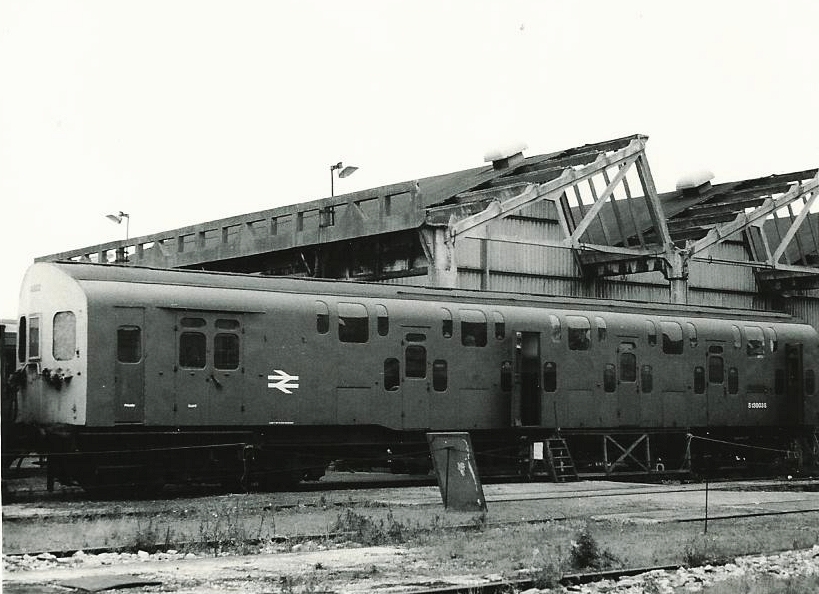

The experimental SR Class 4DD double-decker trains were a unique feature of the Dartford and Gravesend routes in the 1950s and 60s. This post brings together historic images, press cuttings, and preservation leads to tell their story.
Overcrowding in Post-War North Kent
For commuters in North Kent after the Second World War, overcrowding was a daily reality. Trains from Dartford, Gravesend, Sidcup, Bexleyheath, and Woolwich into Cannon Street, Charing Cross, and London Bridge were packed to the doors. By the late 1940s, the newly formed British Railways Southern Region needed a bold, fast solution.
A Radical Idea: Two Levels, One Train
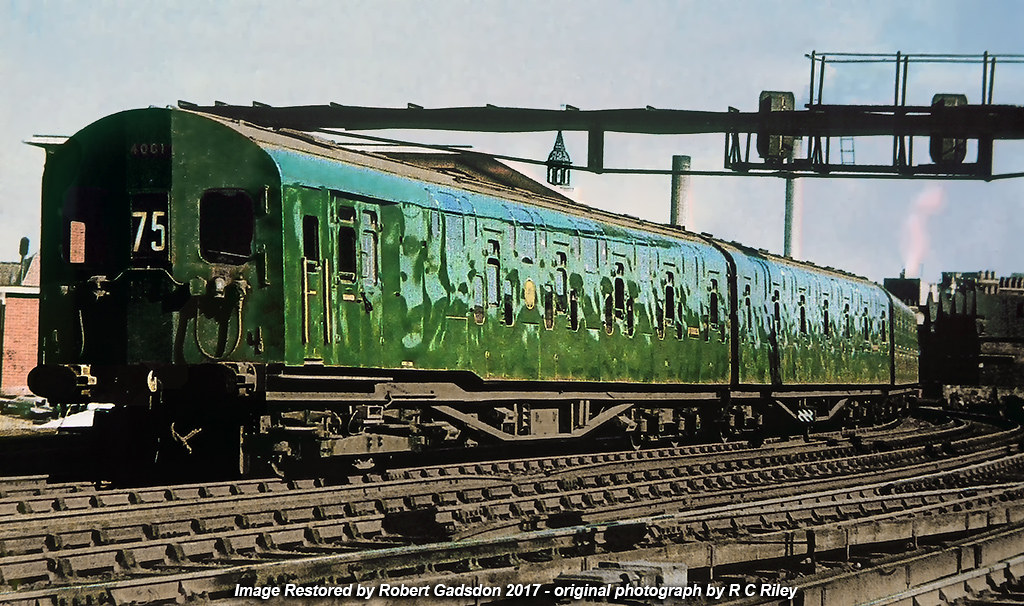
In 1949, British Railways introduced the SR Class 4DD—Britain’s only double-decker electric trains. Designed by Oliver Bulleid, these experimental units aimed to tackle commuter congestion on the Charing Cross–Dartford line. Two four-car sets (nos. 4001 and 4002) were built at Lancing and Eastleigh Works.
Unlike true double-deck trains seen in Europe and North America, Britain’s restrictive loading gauge demanded ingenuity. The solution? A split-level design with alternating high and low seating compartments—creating interleaved upper and lower decks without raising the train’s overall height.
What Was Built
- Units: Two four-car sets (nos. 4001 and 4002)
- Configuration: DMBT–TT–TT–DMBT (Driving Motor Brake Third – Trailer – Trailer – Driving Motor Brake Third)
- Depot: Based at Slade Green for their entire service life
Technical Profile
| Feature | Detail |
|---|---|
| Built | 1949 |
| In Service | 1949–1971, primarily on Charing Cross–Dartford routes |
| Capacity | 552 seated + ~150 standing per set |
| Length | Approx. 257 ft |
| Power | English Electric; 750 V DC third rail |
| Preservation | Two DMBTs (nos. 13003 & 13004) survive |
| Fate | Trailers scrapped; DMBTs preserved by Bulleid 4-DD Group |

SR Bulleid Class “4-DD” 750v dc 3rd rail 4-car double deck inner commuter emu No.4902 (later No.4002) in Rail Blue with all yellow front end at the Ashford Steam Centre, 10/72. Scanned photograph taken with a Kowa SET.
Design Details
- Upper Deck: Headroom of just 5’7″—taller passengers had to stoop. Seating was 3+2.
- Lower Deck: Conventional saloon layout, also 3+2 seating.
- Access: Narrow staircases and fewer doors than standard EMUs led to longer boarding times.
- Nickname: Though popularly called “double-deckers,” they were officially known as 4DD units.
Livery & Modifications
- Early Years (1949): Painted in BR green (often referred to as “malachite”) with silver-grey roofs and black underframes.
- 1960s: Repainted in darker BR(S) green with full yellow ends for visibility.
- Structural Changes: Roofs were cut and solebars reinforced to address frame issues.
- Maintenance: As unique stock, they received routine attention at Eastleigh but were often last in line for upgrades compared to the more numerous EPB fleet.
In Service on the Dartford Lines
The 4DDs served peak-hour commuter runs into:
- Cannon Street
- Charing Cross
- Occasionally London Bridge
Passing through:
- Dartford
- Stone Crossing
- Greenhithe
- Northfleet
- Gravesend Central
Local residents recall the excitement of seeing a double-decker train arrive. Children loved climbing upstairs, though commuters quickly discovered the cramped upper saloon was less than ideal during rush hour.
 Elsie esq., CC BY 2.0 <https://creativecommons.org/licenses/by/2.0>, via Wikimedia Commons
Eyewitness Recollections
“It was the talk of the town when the first double-decker came through. Everyone wanted to sit upstairs. But after a week the novelty wore off—you could barely stand up, and in the summer it was like an oven.” —Gravesend commuter, 1950s
“You’d often miss your connection because people took so long getting off. The stairs were narrow, and if someone had a briefcase, you were stuck behind them all the way down.” —Dartford passenger
“The fitters hated them. With only two units built, nothing was standard—if a part failed, it had to be bodged or ordered specially.” —Slade Green depot railwayman
Why They Fell Short
Despite their innovation, the 4DD units faced several challenges:
- Cramped upper deck: Only 5’7″ headroom
- Poor ventilation: Especially problematic in summer
- Slow station stops: Narrow stairs and fewer doors increased dwell times
- Maintenance complexity: Non-standard parts made repairs difficult
- Passenger comfort: Less popular than standard EPBs
Withdrawal & Legacy
After just over 20 years in service, both units were withdrawn in 1971:
- Unit 4001: Scrapped
- Unit 4002: Partially preserved
- 13003: Preserved at Epping Ongar Railway (formerly Coventry Electric Railway Museum)
- 13004: Stored unrestored, formerly at the National Railway Museum outstation
No complete unit survives, but the preserved motor coaches offer a tangible link to this bold, if flawed, chapter in British rail history.

Paul Miller, Attribution, via Wikimedia Commons
A rare British Rail double-deck coach.


Legacy in Gravesend & Dartford
For a generation of commuters, the 4DDs were both a novelty and a nuisance. They briefly offered more seats during peak hours, but their shortcomings made them a failed experiment.
Still, the memory of seeing a double-decker train at Gravesend Central or Dartford lingers. For children, it was thrilling; for commuters, frustrating; and for railwaymen, a headache.
Britain’s restrictive loading gauge ultimately made true double-decker trains impractical. The 4DDs remain a quirky footnote in the story of our local lines—a bold idea that never quite fitted.
From https://www.youtube.com/@JagoHazzard
Header photo – Hugh Llewelyn, CC BY-SA 2.0, via Wikimedia Commons
💬 Did you ever spot, ride, or hear stories about the 4DD units? Share your memories below.